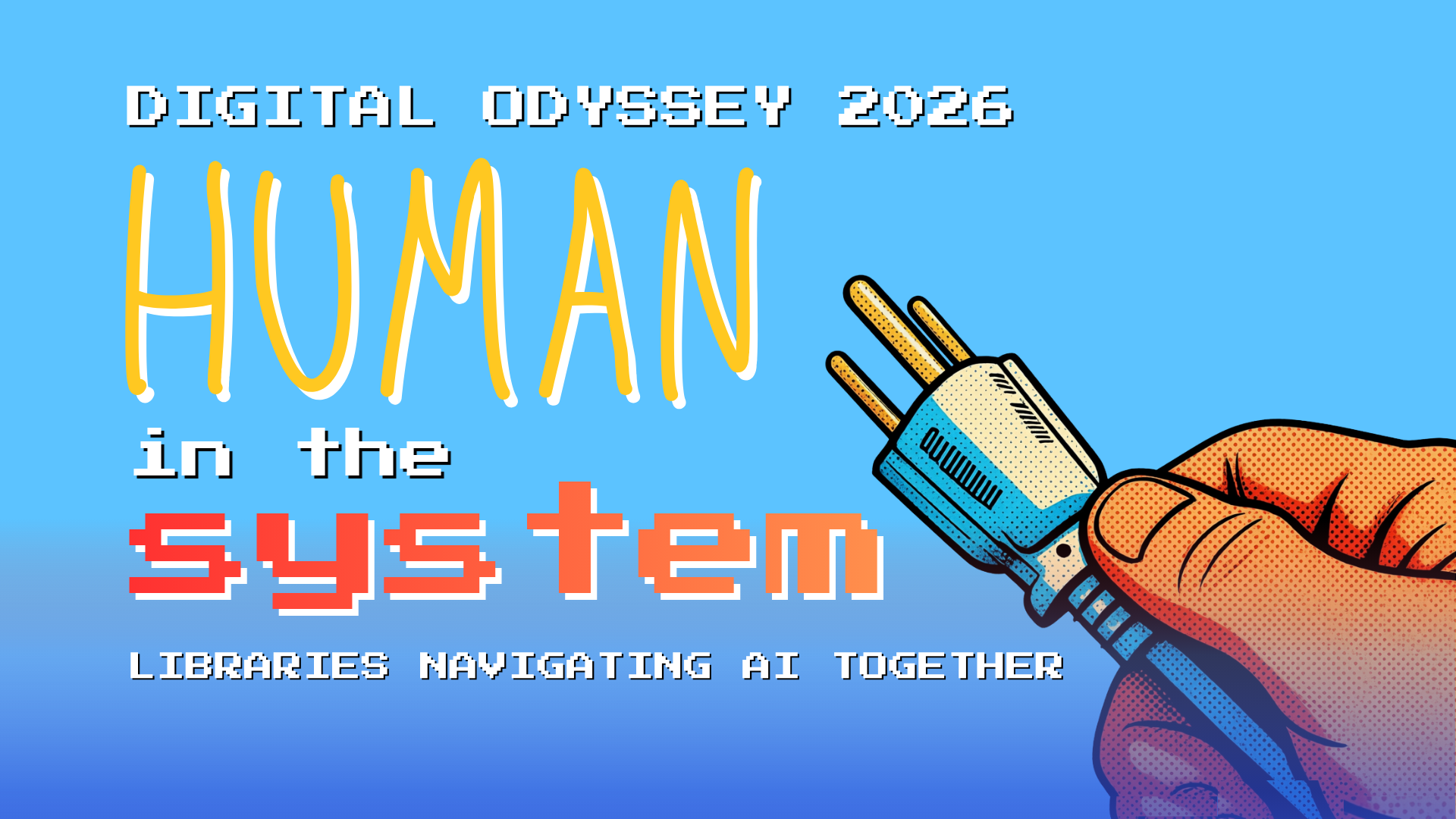
Digital Odyssey is a full-day virtual conference with a focus on how to interrogate what it means to adopt, adapt, and advocate in an AI-shaped information landscape. Together we’ll explore a timely question: How do we stay human-forward while working within increasingly automated systems?
This year’s theme, “Human in the System: Libraries Navigating AI Together”, is neither a wholesale celebration of AI, nor a complete condemnation of it. Instead, participants will use multiple lenses — practical to ethical, day-to-day workflows to governance— and share in clearer language, sharper questions, and concrete next steps for your context. We’ll surface real-world use cases (including what’s working and what isn’t), policy and decision-making considerations, and how libraries can explore new capabilities while keeping privacy front and centre.
Whether you’re experimenting with tools, writing guidelines, supporting digital literacy, or simply trying to keep up with the pace of change, you’ll find a space to learn alongside peers—navigating AI together, with curiosity, care, and community at the core.
Kari Weaver, Program Manager, Artificial Intelligence and Machine Learning with the Ontario Council of University Libraries (OCUL), brings a rare combination of practical library experience and international research leadership on AI use in libraries.
In this interview with OLA Technology Communities of Practice Facilitator Ben Van Gorp, Kari shares what she’s learning from AI pilot projects across Ontario university libraries, as well as from international efforts to establish standards for AI disclosure.
Highlighting the practical realities of AI disclosure, the evaluation of AI outputs, and the challenges and opportunities of developing AI policy, this session also offers a sneak peek at Kari’s preliminary research findings. This conversation sets the stage for thoughtful, values-driven engagement with AI that will be explored across the rest of the day’s Digital Odyssey sessions.
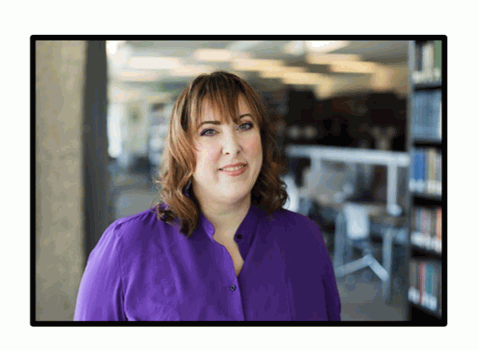
Kari D. Weaver
Program Manager, Artificial Intelligence and Machine Learning, Ontario Council of University Libraries
Program Manager, Artificial Intelligence and Machine Learning, Ontario Council of University Libraries
Kari D. Weaver (she/her) currently serves (on secondment) as the Program Manager, Artificial Intelligence and Machine Learning with the Ontario Council of University Libraries (OCUL) where she leads pilot projects exploring AI augmentations to existing library workflows and designs and delivers professional development training on AI and Machine Learning across OCUL member libraries. Additionally, she is a continuing sessional faculty member in the Department of Leadership, Higher, and Adult Education at the Ontario Institute for Studies in Education (OISE) at the University of Toronto. She holds her B.A. from Indiana University, her M.L.I.S. from the University of Rhode Island, and her Ed.D. in Curriculum and Instruction from the University of South Carolina.
Dr. Weaver’s wide-ranging research background includes study of accessibility for online learning, information literacy, academic integrity, misinformation, and she is widely recognized as an expert in AI citation, attribution, and disclosure practices for her development of the Artificial Intelligence Disclosure (AID) Framework. She currently co-leads a broad international effort with collaborators from the World Conference on Research Integrity Foundation (WCRIF), the International Science Council (ISC), the Committee on Publication Ethics (COPE), the Association of Scientific, Technical and Medical Publishers (STM) and the Global Young Academy (GYA) to establish a Global Reporting Standard for AI Disclosure in Research.
AI can be impressive, frustrating, helpful, and unreliable — sometimes all at once. In this lightning‑talk session, speakers working alongside libraries share what they’ve seen play out in practice, offering grounded observations about what’s proving useful, what remains uncertain, and what libraries are being asked to hold as these tools become more present in shared work.
Talks:
- AI and Accessibility: A Love-Hate Relationship | Ioana Gandrabur, Centre for Equitable Library Access (CELA)
- AI in the Library: Less Magic, More Infrastructure | Brian Pichman, Evolve Project / Bywater Solutions
- So… Is AI Wrecking the Planet? (A Librarian’s Reality Check) | Liana Giovando, Pertinence
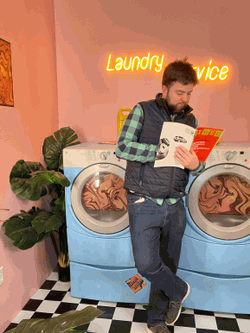
Brian Pichman
Evolve Project / ByWater Solutions
Evolve Project / ByWater Solutions
Brian Pichman, a forward-thinking technologist and champion for progress, breathes new life into libraries and educational institutions through his groundbreaking work across his careers. By seamlessly integrating state-of-the-art technology, fostering dynamic collaboration, and nurturing a culture of innovation, Brian masterfully transforms organizations into vibrant centers of creativity, knowledge-sharing, and community engagement that inspire lifelong learning. His unwavering commitment to reimagining the role of libraries and educational institutions in the modern world has a profound impact on communities, reshaping the way organizations operate and cementing his legacy as a transformative force for change in the world of education.

Liana Giovando
Pertinence
Pertinence

Ioana Gandrabur
Centre for Equitable Library Access (CELA)
Centre for Equitable Library Access (CELA)
Ioana is a peer trainer at CELA. Herself a longtime CELA user, she is passionate about accessible technology and enjoys teaching it to other CELA users. She also provides support to public libraries in using CELA services to promote accessible reading. Ioana is also a professional concert guitarist, performing and teaching music internationally.
Public and school libraries are finding themselves at the centre of new conversations about AI, learning, and responsibility. These lightning talks explore how library workers are supporting youth, staff, and communities as they navigate AI — experimenting, adapting, and shaping what meaningful AI education can look like in practice.
Talks:
- Exploring the Edges with Staff: Teaching AI Through Vibe Coding Hackathon | Jackie Lee, Markham Public Library
- School or Public Librarians: Who is Responsible for Teaching Youth About AI? | Christopher Knapp, London Public Library
- What Are Public Libraries Anyway? Thriving With AI Disruption | David Mackey

Christopher Knapp
London Public Library
London Public Library
Christopher Knapp, a PhD LIS Student at Western University, has been conducting ongoing research on the topic of providing access to information for 2SLGBTQIA+ children, youth, and families via collection & program development, safe space creation, and professional behavior standards since 2016. Prior to starting his PhD LIS, he completed his MLIS at Western University in 2017, as well as a B.A. in History and English Literature (2012) and a B.Ed. with Secondary specialization (2013) in the same fields at UBC. Christopher has worked as a high school teacher and teacher-librarian on-call, and is currently a Children’s & Teen Librarian with the London Public Library.

David Mackey
-
-
David serves on the Stratford Public Library Board, the Ontario Library Service Board, and the OLBA Council. Through his dedication to libraries, he champions the role of accessible, trusted knowledge in creating resilient, human-centred communities.
David is also a board member of the Canadian Internet Registration Authority (CIRA), advocating for safe, secure, and inclusive digital infrastructure across Canada.

Margaret Lam
Vice-Chair, Kitchener Public Library Board
Vice-Chair, Kitchener Public Library Board
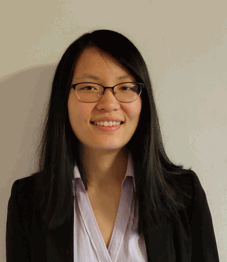
Margaret Lam (M.I.) is Vice-Chair of the KPL Board and Design Research Lead at Octagram, a software consultancy in Waterloo, Ontario. She consults and advises on strategic digital initiatives, where she brings a nuanced understanding of how human-centered design practices can inform social innovation and digital transformation.
In 2016, building on an OLA Super Conference session with Dr. Bill Irwin and David Mackey, she launched the “What Are Public Libraries Anyway?” Substack as a professional development resource for library leaders, professionals and trustees navigating rapid technological change. She curates discourse from a cross section of industries and perspectives that are relevant to the library sector.
Over a decade ago, she founded BeMused Network, a SaaS platform for the performing arts. For her next chapter, she is exploring what copyright looks like for independent creators in the age of AI."

Jackie Lee
Markham Public Library
Markham Public Library
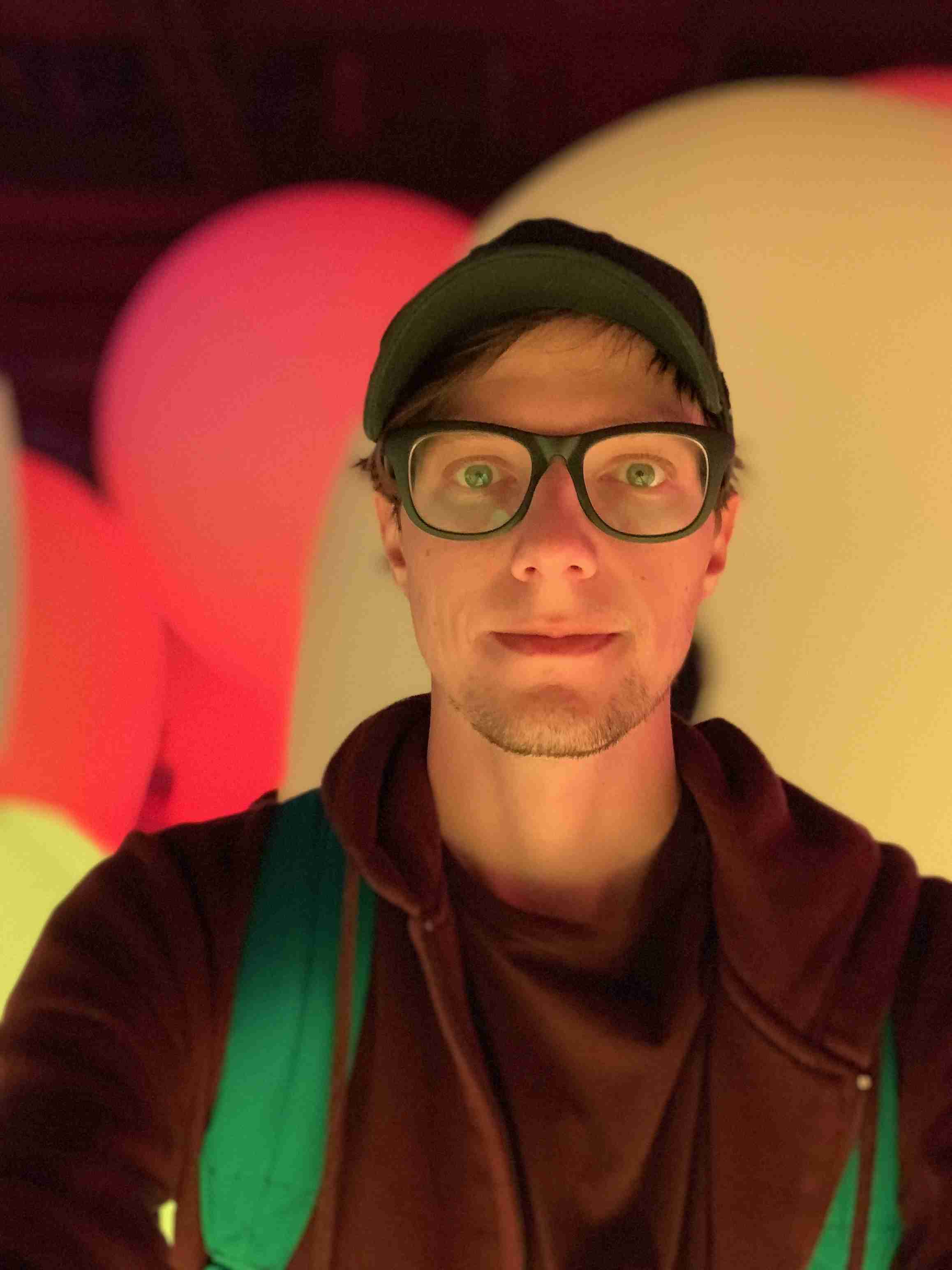
Born and raised in Hong Kong and having spent more than half my life in Canada, I embrace my Chinese Canadian identity wholeheartedly. With an academic background in Communication & Journalism and Education, I have been working in the public library field for close to a decade. I am currently a Community Librarian at Markham Public Library, focusing on business and financial literacy. When I’m not working, I love gardening, going on foraging trips, trying new recipes, and binge‑watching K‑dramas.
Join the CULC Futures Lab team as they present the resources developed for CULC leaders to build an AI informed Library. Presenters will talk about AI policy suggestions as well as staff training considerations. You will walk away with knowledge about upcoming CULC resources to prepare for AI in your library.

Ab Velasco
Toronto Public Library
Toronto Public Library

Jason Tooral
Ajax Public Library
Ajax Public Library

Meg Uttangi Matsos
Burlington Public Library
Burlington Public Library

Jessie Bach
Marigold Library System
Marigold Library System
Please note that all on-demand materials will go live on June 8th at 9AM ET and will be available to view until August 31, 2026.
Email remains a primary channel for professional collaboration, yet extracting meaningful insights from lengthy threaded discussions is time-consuming and cognitively demanding. This presentation introduces an OCLC Research project investigating the capacity of large language models (LLMs) to survey, analyze, and summarize complex email discussions within library and information science communities.
Beyond summarization, this research opens exciting possibilities for organizations seeking to unlock the hidden value of their email archives. Potential applications include identifying emerging trends and pain points from customer communications, onboarding new staff by distilling institutional knowledge from historical discussions, preserving organizational memory, and streamlining decision-making by surfacing key action items and consensus points from collaborative threads.

Devon Smith
OCLC
OCLC
Please note that all on-demand materials will go live on June 8th at 9AM ET and will be available to view until August 31, 2026.
As part of its AI Upskilling initiative, which seeks to provide free access to AI tools, training and programs, the Toronto Public Library recently launched new AI Learning Kits for customers to borrow at each of its 13 Digital Innovation Hub locations. Kits consist of an mBot2 robot that customers can use to explore AI concepts like machine learning, image recognition and voice recognition through self-guided activities included with each kit.
This Lightning Talk will share practical strategies for rolling out a similar kit at your library, including staff engagement, selection criteria, privacy and security reviews, and training. Participants will learn best practices for activity development, including appropriate framing of AI concepts to support digital literacy learning.

Aleksandra Majka
Senior Services Specialist, TPL
Senior Services Specialist, TPL
Aleksandra is a Senior Services Specialist at Toronto Public Library, developing, coordinating and supporting the Digital Innovation Hub service, which is currently available at 13 Toronto Public Library branch locations.

Marvella Lee
Services Specialist - Creation Loft, North York Central - TPL
Services Specialist - Creation Loft, North York Central - TPL
Marvella is a Services Specialist in the Creation Loft at North York Central Library. The Creation Loft includes both a Digital Innovation Hub and a Fabrication Studio, and she plays a key role in supporting programming and services in that space.

Jorge Guevara
Digital Design Technician (Digital Innovation Hub), Richview Library - TPL
Digital Design Technician (Digital Innovation Hub), Richview Library - TPL
Jorge is a Digital Design Technician at Richview Library, where he supports the Digital Innovation Hub through customer service and the delivery of innovative programming.
Please note that all on-demand materials will go live on June 8th at 9AM ET and will be available to view until August 31, 2026.
As generative AI rapidly enters legal research workflows, law libraries are being called on to set boundaries, build literacy, and safeguard trust. Drawing on real‑world experience supporting lawyers and students, this lightning talk explores the law librarian experience when it comes to using AI pragmatically and ethically, where AI creates real risk (including hallucinated citations), and why human judgment remains essential. Although grounded in the context of law libraries, the policy considerations, training strategies, and the evolving role of the librarian as translator, educator, and risk mitigator are applicable across all library sectors.

Martha Stortz
McCarthy Tetrault LLP
McCarthy Tetrault LLP

Rebecca Due
Research Specialist, McCarthy Tetrault LLP
Research Specialist, McCarthy Tetrault LLP
Please note that all on-demand materials will go live on June 8th at 9AM ET and will be available to view until August 31, 2026.
Artificial intelligence is rapidly entering healthcare environments and without proper training, students risk misdiagnosing AI’s reliability, over-relying on its outputs, or creating ethically dubious situations. This lightning talk introduces a practical “AI First Aid” approach that we have been employing at the Michener Institute to help our learners identify how to triage any generative AI tool before trusting it with clinical or academic tasks.

Thomas Blennerhassett
Michener Institute of Education at UHN
Michener Institute of Education at UHN
Please note that all on-demand materials will go live on June 8th at 9AM ET and will be available to view until August 31, 2026.
AI is reshaping library work, raising urgent questions about trust, stewardship, and how new capabilities can strengthen—not compromise—library values. This session will explore our human-centered approach to AI in libraries: how we partner with library professionals to apply AI responsibly in ways that support core services and community outcomes.
We’ll discuss where AI can meaningfully assist libraries across the lifecycle of describing, connecting, and sharing resources—improving workflows and user experiences while keeping professional judgment, transparency, and accountability at the center. The session will also highlight the principles and governance practices that guide this work, including privacy and data stewardship, bias and evaluation, sustainability, and respect for intellectual property.
Participants will leave with a clearer view of our approach to AI: practical, values-aligned, and built with libraries to advance access, discovery, and resource sharing at scale.

Daniel Boivin
OCLC
OCLC
Artificial intelligence technologies are transforming how public institutions deliver services. In this keynote, Ontario’s Information and Privacy Commissioner, Patricia Kosseim, will explore the growing role of AI in the public sector and the need for responsible governance frameworks that protect fundamental rights while enabling innovation. Drawing on the Principles for the responsible use of artificial intelligence, a joint initiative by the IPC and the Ontario Human Rights Commission, she will discuss how AI can be used in ways that are ethical, transparent, and people-centred.
Commissioner Kosseim will explore how transparency, privacy, and public trust must remain central as organizations navigate the rapidly evolving AI environment.
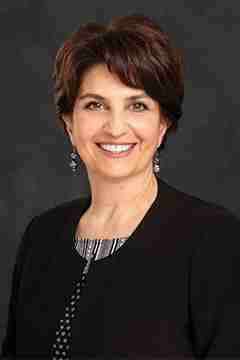
Patricia Kosseim
Information and Privacy Commissioner of Ontario, Information and Privacy Commissioner of Ontario
Information and Privacy Commissioner of Ontario, Information and Privacy Commissioner of Ontario
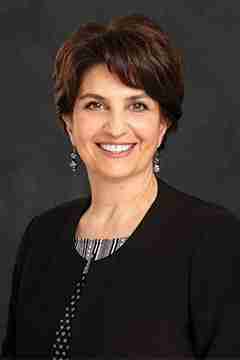
Patricia Kosseim began her second term as commissioner on July 1, 2025. She has significant experience and a wealth of knowledge in the areas of privacy and access law, having worked in public, private and health sectors, and across various jurisdictions.
Prior to joining the IPC, Patricia was counsel in Osler’s Privacy and Data Management Group where she provided strategic advice to clients on matters of privacy, data governance, and access law. She also led a number of thought leadership initiatives as national co-leader of Osler’s AccessPrivacy knowledge platform.
For more than a decade, Patricia served as senior general counsel and director general at the Office of the Privacy Commissioner of Canada in Ottawa. During that period, she was responsible for advancing a number of major cases before the federal courts and the Supreme Court of Canada; advising on critical privacy investigations; appearing before parliamentary committees on significant legislative bills; developing national and international policies; leading a national research funding program; and, overseeing a technology analysis team and laboratory.
While holding executive positions at Genome Canada and the Canadian Institutes of Health Research, Patricia developed and led national strategies for addressing legal, ethical, and social aspects of health research and genomics technologies. She began her career in Montreal practicing in the areas of health law, civil litigation, human rights, privacy, and labour and employment with a leading national law firm.
Patricia has published and spoken extensively on matters of privacy law, health law, and ethics. She has taught part-time at the University of Ottawa Faculty of Law and has held many professional appointments and board memberships, including as a member of the Board of Governors of the Ottawa Hospital; chair of the Board of Directors of the Ottawa Hospital Research Institute; vice-chair of the Research Integrity Committee of les Fonds de recherche du Quebec; member of the National DNA Databank Advisory Committee; and member of various expert working groups of the Organization for Economic Co-operation and Development.
Patricia obtained her business and law degrees from McGill University in Montreal, and a Master’s Degree in Medical Law and Ethics from King’s College, University of London. She is a member of the Law Society of Ontario, as well as the Barreau du Quebec, and is fluently bilingual in both official languages.
When she is not in the office — either physically or virtually — Patricia enjoys all-season, outdoor activities with her family and their dog Rocky.
Please note that all on-demand materials will go live on June 8th at 9AM ET and will be available to view until August 31, 2026.
From April to end of June 2026, Toronto Public Library is hosting an Innovator in Residence program with a focus on AI and Music Production (tpl.ca/airesident). Community members are invited to free programs, workshops and one-on-one consultations to learn about the history of generative music, copyright, and ethical issues in the era of AI - and to get hands on with gen AI tools.
In this lightning talk, hear from TPL services specialist Kate Restivo and their resident Joel S. Silver, a veteran composer, producer and immersive experience designer. They'll share an overview of the program's planning process, outcomes and community feedback, its successes and lessons learned, and how this residency is placing human-led creative expression at the heart of the programming.

Kate Restivo
Toronto Public Library
Toronto Public Library

Joel S. Silver
Silverphonic SoundLab
Silverphonic SoundLab
Please note that all on-demand materials will go live on June 8th at 9AM ET and will be available to view until August 31, 2026.
Author Grant Havers said this about Canadian media guru Marshall McLuhan: he [McLuhan] suggested that the careful study of a new medium’s potential impact makes it “possible to program a strategy of evasion and survival”.1 It can be hard to slow down and examine critically the impact of technology that evolves as rapidly as Generative AI has in the last few years. Generative AI is “both product and participant: a medium that speaks, listens, and learns — an extension of thought rendered in code”.2 This talk will focus on the impact of AI in schools and school libraries and how it is imperative to use all our school library skills to consider if, when, how, and why we (or our students) might use AI, the positive and negative impacts of those decisions, and our potential approaches to this (brave?) new world.
1 https://www.cornellpress.cornell.edu/swimming-in-the-waters-of-ai-grant-havers-08-27-2025/
2 https://ic4ml.org/journal-article/being-an-ai-in-a-marshall-mcluhan-world/

Diana Maliszewski
Toronto District School Board
Toronto District School Board
Diana Maliszewski (OCT BA BEd MEd) is the teacher-librarian at Agnes Macphail Public School in the Toronto District School Board and has worked as a school library professional for over twenty-five years. From 2006 - 2018, she was the editor-in-chief of The Teaching Librarian, the official publication of the Ontario School Library Association. Currently, she is the co-Vice President of the Association for Media Literacy and Canada's representative with the North American and European chapter of UNESCO's Media and Information Literacy Alliance. Diana developed and facilitates the Teacher Librarianship Additional Qualification courses for York University and Queen's University. Diana has been honoured with several awards, such as the Follett International Teacher-Librarian of the Year in 2008 and the OLA President's Award for Exceptional Achievement in 2013. She blogs weekly as part of her reflective professional practice at http://mondaymollymusings.blogspot.com.
Please note that all on-demand materials will go live on June 8th at 9AM ET and will be available to view until August 31, 2026.
A lot has been said by a lot of people about AI in schools. How often have these conversations included students? This pre-recorded session brings together a teacher-librarian with three pre-teens, from different school boards in Ontario, to chat about how they navigate AI at school and at home. We may not solve all the world’s problems with this conversation but hopefully you’ll gain insights into how your students view the “electronic elephant in the room."
Diana Maliszewski
Toronto District School Board
Toronto District School Board
Diana Maliszewski (OCT BA BEd MEd) is the teacher-librarian at Agnes Macphail Public School in the Toronto District School Board and has worked as a school library professional for over twenty-five years. From 2006 - 2018, she was the editor-in-chief of The Teaching Librarian, the official publication of the Ontario School Library Association. Currently, she is the co-Vice President of the Association for Media Literacy and Canada's representative with the North American and European chapter of UNESCO's Media and Information Literacy Alliance. Diana developed and facilitates the Teacher Librarianship Additional Qualification courses for York University and Queen's University. Diana has been honoured with several awards, such as the Follett International Teacher-Librarian of the Year in 2008 and the OLA President's Award for Exceptional Achievement in 2013. She blogs weekly as part of her reflective professional practice at http://mondaymollymusings.blogspot.com.
The current landscape of modern knowledge work is constantly evolving in the face of generative AI (GenAI). In the face of such rapid developments, it is vital that users remain up to date with the skills and knowledge needed to use GenAI effectively at work. Drawing on the findings of my doctoral research, I highlight the continued importance of informal knowledge sharing interactions for supporting user learning with GenAI use, reflect on current challenges to engagement in sharing, and provide recommendations for supporting continued sharing and peer learning over time.
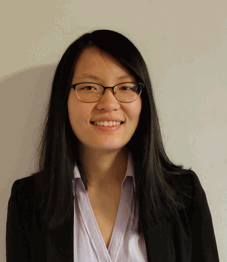
Nancy Xia
University College London
University College London
Qing (Nancy) Xia is a final-year PhD researcher in Human-Computer Interaction (HCI), currently studying at University College London and sponsored by Microsoft Research Cambridge and the Engineering & Physical Sciences Research Council in the UK. Her work focuses on understanding the conditions which foster collaborative behaviours in AI use, using both qualitative and quantitative research methods, and she has published many of her works in high-impact academic venues such as CSCW, CHIWORK, and VLHCC. Nancy has a BSc in Experimental Psychology and MSc in Human-Computer Interaction, both from UCL. She is currently supervised by Prof. Duncan Brumby and Prof. Anna Cox from UCL, and Dr. Advait Sarkar from Microsoft Research Cambridge. She enjoys applying her research skills to solving problems, and following her graduation aims to move into consultancy and industry UX research.
Academic and health libraries are increasingly positioned as guides in the use of AI tools — in research, instruction, and institutional culture. These lightning talks explore how library workers are navigating that responsibility, sharing experiences that highlight the labour, expertise, and care involved in teaching and supporting AI in academic and medical contexts.
Talks:
- The Tools We Teach : How Our Medical Library Offers AI Tool Support | Sophie Fillion, Centre Intégré de santé et services sociaux de la Montérégie-Est
- Ignore It, Fear It, Teach It: The Evolution of AI in Library Instruction | Ryan Tucci, Carleton University
- The Human and the Machine? Experiences with AI Technology in the Library | Stefania Kuczynski, Scholars Portal / Ontario Council of University Libraries
- AI in Action: Shaping Campus, Culture, and Creativity | Christina Hwang and Dale Storie, University of Regina

Stefania Kuczynski
Scholars Portal / Ontario Council of University Libraries
Scholars Portal / Ontario Council of University Libraries
Stefania Kuczynski is a graduate student at the University of Toronto's iSchool, where she explores the intersections of GLAM, collective memory, and reconciliation. She currently works with OCUL and Scholars Portal on their AIML initiative as a metadata support specialist student, assisting with testing Al tools to enhance under-described collections of Canadian government documents.

Christina Hwang
University of Regina
University of Regina
Christina Hwang is Associate Dean (Academic) at the University of Regina’s Dr. John Archer Library and Archives, where her portfolio includes Collection Services, User Services, and the Liaison Librarian program.

Dale Storie
University of Regina
University of Regina
Dale Storie is the Associate Dean (Research) at the Dr. John Archer Library and Archives, University of Regina, where his portfolio includes Archives, Data Services, Discovery Technologies, Copyright, and Scholarly Communication.
Ryan Tucci
Communication, Media Studies and Journalism Librarian, Carleton University - MacOdrum Library
Communication, Media Studies and Journalism Librarian, Carleton University - MacOdrum Library
Ryan Tucci is the Communication, Media Studies and Journalism Librarian at Carleton University's MacOdrum Library. Since ChatGPT appeared on the scene in late 2022, he has been exploring the rapidly evolving landscape of generative AI, with a particular focus on its implications for information literacy. He is also interested in how students navigate the transition from high school to higher education, particularly the skills they bring with them and the gaps they encounter along the way.
Sophie Fillion
Centre Intégré de santé et services sociaux de la Montérégie-Est
Centre Intégré de santé et services sociaux de la Montérégie-Est
Sophie Fillion has been a librarian for over three years now, and has a marked interest in informational literacy. Since the arrival by storm of ChatGPT, where she was working in a small university at the time, she has been following new AI innovations and attempting to build an expertise to transmit to her coworkers and students. Sophie now works to accomplish this in her medical setting, with all its particularities. She is fully bilingual, but works 99% of the time in French, so please forgive in advance any strange translations!
Thank You to Our Partners!

Kermode Education is at the forefront of shaping responsible digital citizens worldwide, empowering individuals and families to navigate the online world with confidence.
Yes, you’ll need to complete registration to gain access to the event. Please click the Register button from the top menu or in the About section to get started.
The information you provide upon registration will only be used to establish you as a user on the platform, create your login credentials, and communicate updates about this event.
Yes, the vFairs platform is compatible with any computer or mobile device and any browser.
OLA's Code of Conduct policy applies to all event attendees, sponsors and speakers. Please review the document at this link.
The event will be on demand until October 1st, 2026. However we may make updates and changes to the platform periodically.